

“Knowledge Gives Me Peace”: Fil’s Journey to Rewrite Their Cancer Risk
13 November 2025
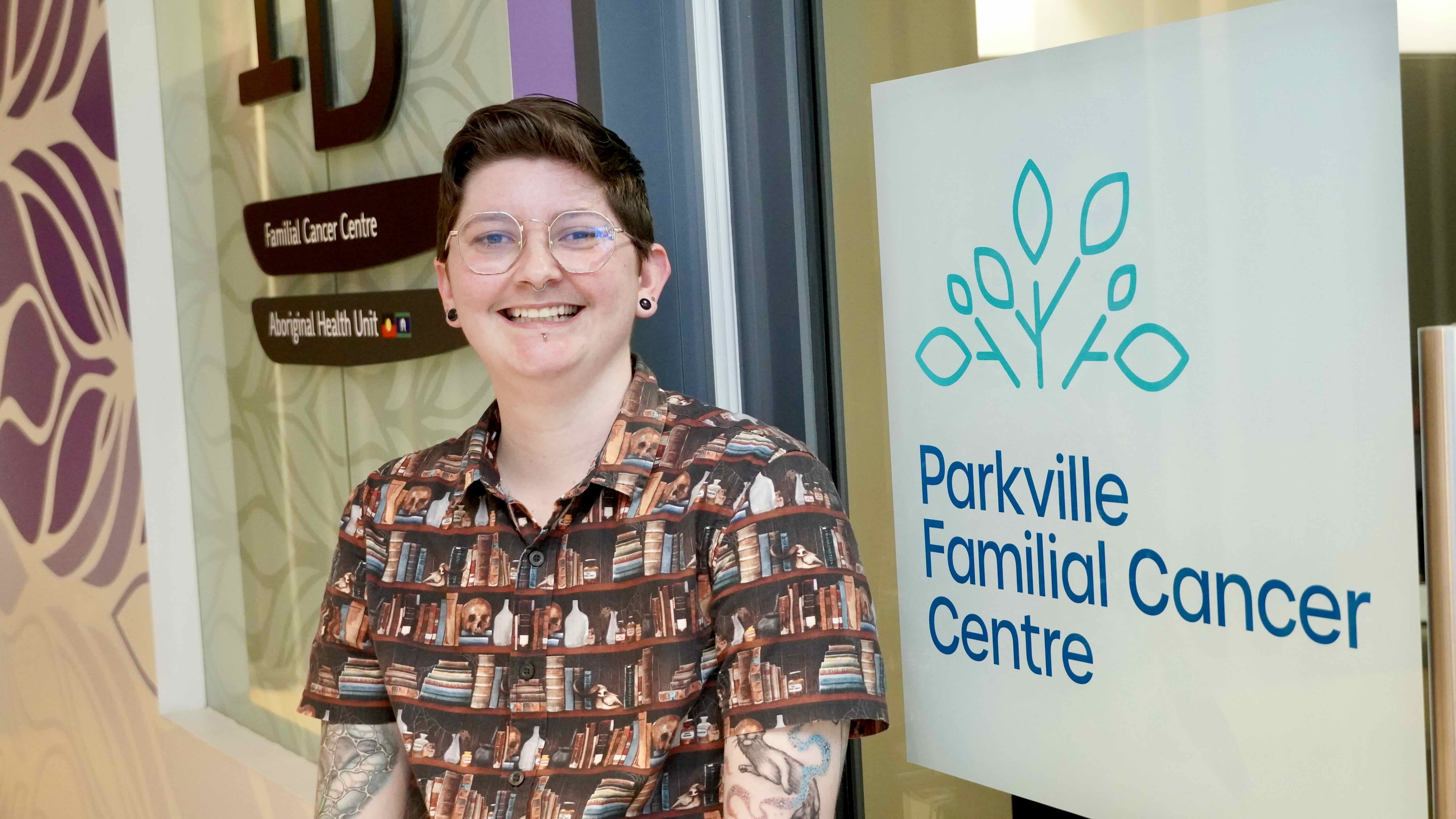
When Filipe Fotheringham’s aunt in Brisbane was diagnosed with two different types of breast cancer within five years, it set off a chain of events that would change the then 26-year-old’s life as they knew it.
Testing revealed their aunt had a BRCA2 gene mutation – one of two important genes that help repair damaged DNA and keep cells growing normally.
The family were told to get tested.
At the time, Fil was happily living life in their twenties, focussing on the usual milestones of early adulthood. Cancer risk was the last thing on their mind.
But a positive result for the BRCA2 gene mutation forced an unexpected confrontation with their own mortality – and a journey that would ultimately end in the removal of their breasts and fallopian tubes to drastically reduce the risk of developing cancer.
“The genetic counsellor told me I had around a 70 per cent chance of developing breast cancer in my lifetime and about a 10 per cent chance of other cancers,” Fil recalls.
“I remember having a breakdown, and I was lucky my partner was there and could ask the questions I couldn’t.
“I was suddenly overwhelmed with feelings about what’s next - surgeries, procedures, how to reduce risks, what your options are.”
Fil suddenly faced some major decisions, their genetic counsellor becoming a steady guide through those choices, helping make sense of complex information and emotions.
“It’s a lot to take in. You don’t have cancer, but you’re high risk, and that’s a strange in-between space to be in,” Fil says.
The counsellor, from the Parkville Familial Cancer Centre, connected Fil with breast oncologists and surgeons at Peter Mac, where they began regular MRIs and risk-reduction discussions.
But the anxiety of the unknown began to take its toll, and they made the decision at 29 to take control.
“Earlier this year, in April, I had a double mastectomy,” Fil says. “Dr Speakman did the surgery, and the care team was incredible. Then, about three weeks ago, I had my fallopian tubes removed because research shows ovarian cancer often starts there.”
Each step was carefully considered.
“I wanted to do it while I was young,” Fil says. “For me, prevention makes more sense than treatment.”
Preparing for surgery, Fil approached the process with reflection and creativity.
“I did a lot to make sure I wouldn’t have regrets,” they say. “I had a breast funeral”.
They also made a mould of their chest before surgery to always have a memory of how their body looked.
As a trans and non-binary person, Fil says the experience brought a complex mix of emotions.
“Because I’m transgender, I was conscious of how these changes might affect how I see myself,” they say. “It’s hard sometimes not to be critical of your body, but I kept reminding myself — this is my process.”
Fil’s story shows how identity, health, and knowledge intersect — and how genetic counsellors can make that journey less daunting.
“You need someone who understands those emotions,” Fil says. “They help you come to terms with it.”
Now, working at Peter Mac, Fil brings their lived experience to their professional role.
“It’s interesting being both a patient and a staff member,” Fil says.
“Sometimes it’s confronting, but it’s also rewarding — especially as a trans person, because I can help improve care for others who might face similar things to me.”
Looking back, Fil feels a deep appreciation for what genetic testing and counselling have made possible.
“I’m grateful for how much things have changed,” they say.
“If I hadn’t known, I might have gone through life unaware — and maybe one day faced cancer without understanding why. Knowledge is power for me. Knowledge gives me peace.”
And that, Fil says, is the true strength that comes from understanding your genetics.
Today is Genetic Counsellors Awareness Day. Find out more about the work of the Parkville Familial Cancer Centre, based at Peter Mac.