

Peter Mac awarded grant to turn COVID-19 immunity into new cancer treatment
23 January 2026
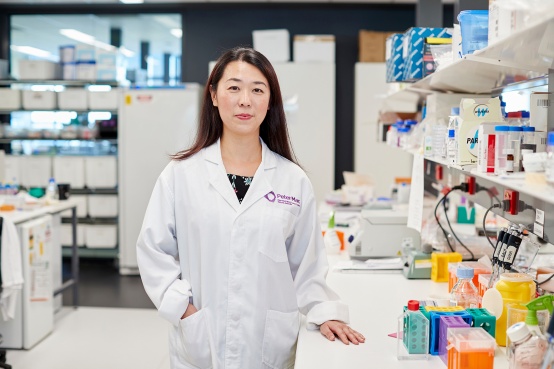
Peter Mac researcher Dr Clare Slaney has received national funding to develop a new type of cancer immunotherapy that uses the body’s existing immunity to COVID-19 to help fight solid tumours.
Dr Slaney’s project - funded by Australia’s Economic Accelerator (AEA) Ignite Program - will alter a patient’s own immune cells to recognise both COVID-19 and cancer cells.
These “dual-specific” T cells are designed to be reactivated and multiplied in the body using a COVID-19 vaccine that will help drive a stronger anti-tumour response.
“CAR T cell therapy has already changed the lives of people with some blood cancers, but it hasn’t yet worked well for solid tumours like lung, breast or ovarian cancer,” Dr Slaney said.
“This funding allows us to explore a new way of overcoming that challenge by using the immune memory people already have to COVID-19. An Australian-developed vaccine platform will be used to drive expansion and activation of the engineered T cells, enabling local manufacture and streamlined clinical translation.
“Our early studies show this approach triggers much stronger T cell activation than other approaches like mRNA.
“That makes it a powerful tool for boosting these engineered cells once they’re back in the patient.”
Importantly, the therapy is expected to be safer than some existing immunotherapies.
“Because these T cells are responding to a foreign viral antigen rather than a normal human protein, we expect lower toxicity and fewer side effects,” Dr Slaney said.
The project will establish a manufacturing process that meets strict clinical-grade standards, test the best vaccine conditions for activating the cells, and demonstrate anti-tumour activity in animal models. It will also lay the groundwork for future clinical trials in Australia.
“Our goal is to move this therapy from early proof-of-concept to a point where it’s ready for human studies,” Dr Slaney said.
“This funding helps bridge that crucial gap and brings us closer to offering a new treatment option for people with hard-to-treat cancers.”
The AEA Ignite program supports research that has strong potential for real-world impact, helping turn laboratory discoveries into future therapies and technologies for patients.