


Peter Mac developed radioactive tracer reveals inflammation deep inside the brain
18 December 2025
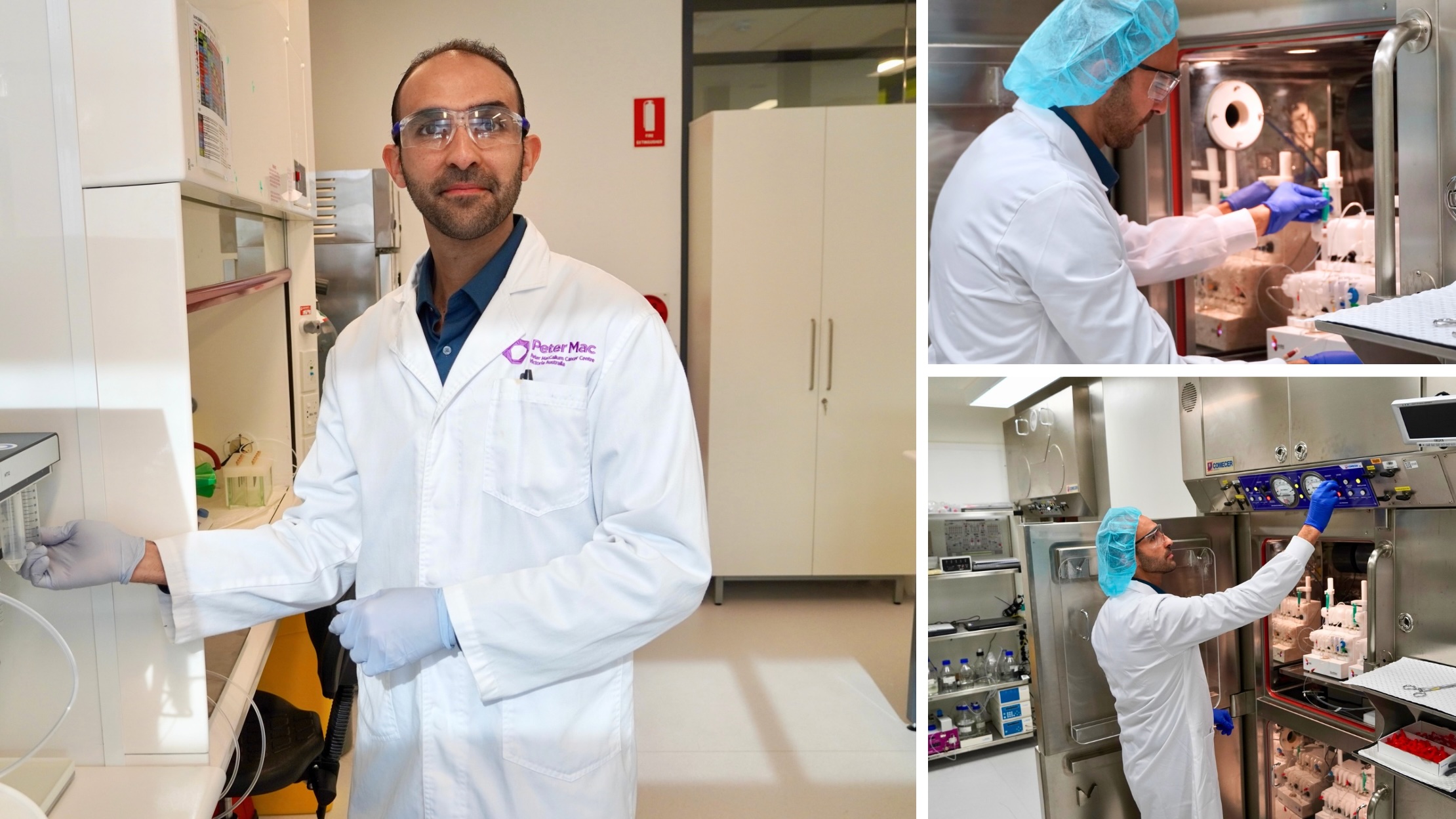
A radioactive tracer is helping to image inflammation deep inside the brain, now available at Peter Mac through pioneering work by Chief Radiopharmaceutical Scientist Associate Professor Mo Haskali and his Radiopharmaceutical Sciences team.
A/Prof Haskali says new radiopharmaceutical advances are opening doors for major neuroscience research programs across the country, including [18F]FBR, a tracer his team was the first to bring into operation in Australia.
"A few years ago, my team and I established [18F]FBR production at Peter Mac, making it the first site in Australia to provide this particularly useful and effective tracer for imaging the Translocator Protein (TSPO) in the brain," Dr Haskali said.
Imaging the Translocator Protein (TSPO) enables researchers to "see" inflammation in the brain. Using a PET scan, they can detect where the tracer collects, showing where neuroinflammation is happening and how active it is. While other TSPO tracers have been used in Australia, [18F]FBR offers distinct advantages in effectiveness and precision.
The tracer has already been supplied to the Melbourne Brain Centre at the Royal Melbourne Hospital, where it is being used to image patients with chronic orofacial and neuropathic pain in a study led by Prof. Luke Henderson from the University of Sydney—the first clinical study in Australia to use this agent.
"It's fantastic to now see this work from our team directly supporting clinical studies," Dr Haskali added. "The dedication and expertise of our Radiopharmaceutical Sciences team has been instrumental in bringing [18F]FBR from concept to clinical application."
Dr Haskali says collaboration across the Parkville Precinct, including with the Melbourne Brain Centre, is accelerating progress.
"Working with our partners means innovations like [18F]FBR can move from implementation to real clinical impact much faster," he said.
"Their expertise in brain cancer research, combined with our radiopharmaceutical capabilities, is helping drive a new wave of imaging and treatment possibilities."