

Peter Mac has been awarded more than 7.5 million in funding for National Health and Medical Research Council (NHMRC) Ideas Grants
12 January 2026
The Ideas Grant scheme is designed to support innovative research projects addressing a specific question.
Acting Executive Director Cancer Research, Professor Jayesh Desai, said it is a fantastic result for Peter Mac and cancer research.
“It is wonderful to see five exciting projects being funded that will further advance our understanding of cancer metastases, resistance, and how we can better harness our immune system,” he said.
“The NHMRC Ideas Grants are highly competitive, making this outstanding result even more impressive. Sincere congratulations to the successful applicants, our Professional Services Team and the Research Consumer Advocates who all helped shape the research projects.”
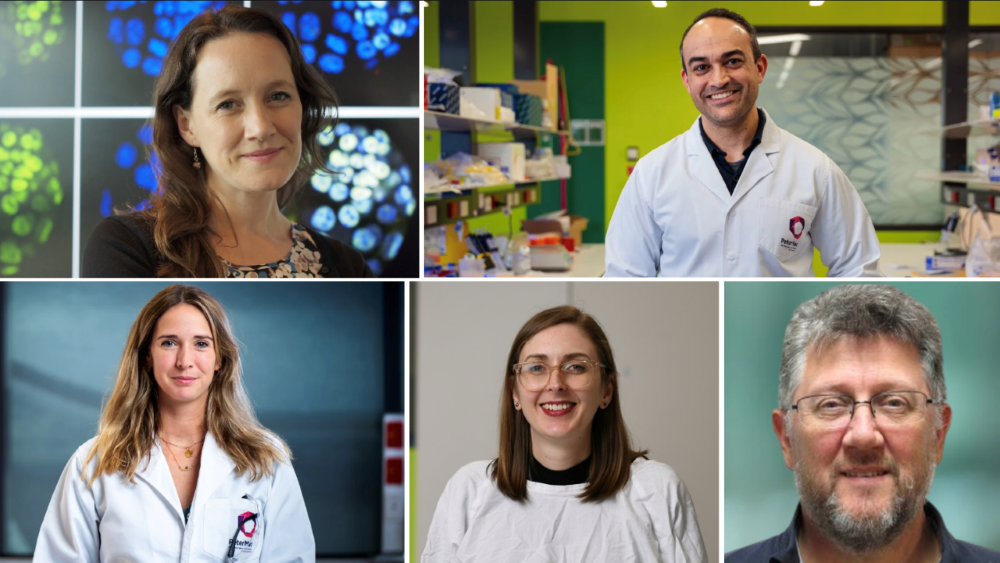
Read more on each project below.
Associate Professor Melanie Eckersley Maslin
Discovering how cancer plasticity is regulated for therapeutic innovation
Cancer cells are very adaptable which is one of the key obstacles in curing cancer. Cancer cells’ plasticity allows them to metastasise and resist treatment which is thought to underpin high mortality rates. This project, co-led by postdoctoral researcher Dr Eleanor Glancy, uses new molecular technologies and research tools developed by the Eckersley-Maslin Lab to understand how plasticity is regulated in breast cancer cells. By understanding how these regulators function, they will pave the way for the therapeutic innovation required to improve patient outcomes.
Associate Professor Ian Parish
Breaking the rules of T-cell biology to improve cancer treatment
CAR T-cell therapy is where a patients’ own immune cells are genetically engineered to attack and kill cancer cells. While this therapy works well against some blood cancers, it is less effective against solid tumours because of a process called “exhaustion” that suppresses the CAR T-cell response against the cancer. Associate Professor Parish aims to re-wire CAR T-cells to resist exhaustion and better fight cancer.
Dr Elizabeth Christie
Identifying the key to treatment resistance in ovarian cancer
Ovarian cancer is challenging to treat because small numbers of cells are not killed by chemotherapy. These surviving cells cause disease relapse that is often hard to treat. In this study Dr Christie will identify and examine the features of these cells, as well as study how they interact with immune cells and other cells surrounding the cancer. This approach aims to seek new strategies that will eradicate all cancer cells to successfully treat ovarian cancer.
Dr Christie will examine the features of these cells and how they interact with immune cells and other cells surrounding the cancer. This approach aims to seek new strategies that will eradicate all cancer cells to successfully treat ovarian cancer.
Dr Isabelle Munoz
Enhancing the Efficacy and Safety of “Armoured” CAR T-Cells for Solid Tumour Treatment
CAR T-cells are patients’ own immune cells educated to kill tumour cells. This therapy is effective for treating blood cancers but not for solid cancers due to a failure of these CAR T-cells to function long-term. Dr Munoz has developed a novel approach to armour CAR T-cells not only to overcome the current limitations but also improve their safety profile. The newly developed ‘armoured’ CAR T-cell therapy aims to be significantly more effective, safer, and holds exciting potential to be developed into a therapeutic option for the clinic.
Professor Steven Stacker
Harnessing early anti-metastatic responses of the vasculature to combat metastasis
The ability of cancer to co-opt the body’s blood and lymphatic vessels to spread to other organs drives most cancer-related deaths. Professor Stacker’s project will consider how the primary tumour manipulates the vessels of distant organs to promote future infiltration by tumour cells, and how vessels fight back. His lab will use cutting-edge technologies to reveal the timing, locations and cellular signals involved. Understanding these mechanisms will lead to new ways to predict and prevent cancer progression.