This program has been designed to assist newly graduated registered nurses to transition into an acute care setting over a 12-month period
The Graduate Nurse Program specifically focuses on consolidating and expanding your clinical ability, judgement and confidence while working as a valued member of Peter Mac. We are committed to providing you with extensive learning opportunities for you to thrive in your nursing career with us.
Highlights of the Graduate Nurse Program
An environment optimal for you to consolidate and enhance your acute nursing skills as well as develop cancer nursing skills
An environment that enables you to develop strong connections with peers due to the small intake of graduate nurses
Flexible educational opportunities to enable progression with your nursing career
An opportunity to work with world renowned cancer experts
A strong wellness focus, with our own free and confidential staff in-house psychology service
Graduate nurses will attend a Clinical Skills Workshop at the beginning of the program and two short courses throughout the program.
Clinical Skills Workshop
This workshop gives new graduate nurses the opportunity to focus on fundamental nursing skills and knowledge, before transitioning to the clinical environment.
Short courses include:
Introduction to cancer
Assessment and management of the acutely ill patient in the oncology setting
Chemotherapy module 1
Cancer care emergencies
Surgical study day
Peripheral cannulation /CVAD management
In addition, graduate nurses attend:
Peer group meetings
The peer group meetings' aim is to provide a safe environment for new nurses to reflect on their practice and learn from each other through constructive group discussion. These meetings are scheduled regularly throughout the program.
And complete:
Competency assessments
The competency assessment tools are designed to assist nurses to demonstrate application of the prerequisite knowledge and skills in specific areas, safely and according to Peter MacCallum Cancer Centre policies, procedures, or clinical guidelines
A variety of learning packages/modules
The learning packages/modules help the graduate nurse link theory to the practice setting.
Performance development reviews
These reviews are designed to provide employees with the means to clarify priorities and expectations, encourage continuous development and promote healthy working relationships. The reviews occur at least three times throughout the program.
Where we allocate graduate nurses as part of the Graduate Nurse Program
The program may include two six-month rotations or an allocation to one ward or unit for its duration. Please see areas where we allocate graduate nurses:
32 bed ward with a clinical (medical) focus on people who have been diagnosed with cancers involving:
Bone and soft tissue
Lung
Skin, and melanoma
Head and neck
Neurological
Gastrointestinal
Genito –urinary and
Gynaecological systems
The ward may also manage paediatric patients. Treatment modalities provided to patients on Ward 3A include chemotherapy, external beam radiotherapy, nuclear medicine treatments and palliative care. The ward incorporates a four bed 'first in human' Clinical Trials Unit.
The ward staff work in collaboration with Victorian Adolescent & Young Adult Cancer Service. This service consists of a multidisciplinary team of healthcare professionals who work alongside cancer specialists at Peter Mac to ensure all aspects of a young person's health and wellbeing are given attention both during treatment and in the years beyond.
32 bed ward with a clinical focus on people requiring surgery as part of their cancer treatment. This includes people who have been diagnosed with the following cancers:
Gastrointestinal
Hepatobiliary
Urological
Prostate
Gynaecological
Breast
Head and neck
Melanoma and
Sarcoma
Ward 6A staff care for patients both pre-operatively and post-operatively and manages patients with surgical complications.
The Cancer Imaging Department provides a comprehensive range of general and specialist diagnostic, interventional and therapeutic services including:
General x-ray
Diagnostic mammography
Ultrasound
Multi-slice helical computerised tomography (CT)
Magnetic resonance imaging (MRI)
Positron emission tomography (PET)
PET/CT co-registration
Diagnostic and therapeutic nuclear medicine
Selected interventional radiology procedures
Bone marrow biopsies
Patient management activities include Central venous access device (CVAD) insertion and removal, barium and contrast studies, percutaneous nephrostomy and biliary drainage, percutaneous gastrostomy (PEG) tube insertion, inferior vena cava (IVC) filter insertion, general fluoroscopic procedures, insertion of hook needle wires for cancer localisations.
A comprehensive service for patients undergoing complex cancer surgery including:
Six theatres
Two procedure rooms including dedicated endoscopy unit
Day of surgery admission
Anaesthetics, intra-operative and post-anaesthetic care
Extended Recovery Unit for high acuity patients
Major surgical focus includes colorectal, upper gastrointestinal, hepatobiliary, breast, urology, melanoma, skin, plastic reconstructive, head and neck surgery, sarcoma/vascular, robotic surgery for several specialities, high dose radiation (brachytherapy) for gynaecological and prostate cancers, intraoperative radiotherapy and chemotherapy.
Allocation to the operating suite within the Graduate Nurse Program is 12 months only and graduate nurses will have the opportunity to experience all the following areas: Scrub/Scout, Anaesthetics, Post Anaesthetic Care Unit (PACU) and Day Surgery throughout the program.
Day Therapy is an integration of the Same Day Services from Peter MacCallum Cancer Centre, Royal Melbourne Hospital and the Royal Women’s Hospital. The service comprises of five areas:
Chemotherapy
Medical
Transfusion
Apheresis
Clinical trials
Chemotherapy
The Chemotherapy Service is a 48-chair service (with room to expand) to provide care for all tumour streams including:
Bone and soft tissues
Brain and spine
Breast
Colorectal
Gynae-oncology
Haematology
Lung
Skin and Melanoma
Upper gastrointestinal
Uro-oncology
Treatments include chemotherapy, immunotherapy and supportive medications.
Medical Day Unit (MDU)
This unit provides symptom control and management for patients receiving treatment and cares for unplanned and unwell oncology patients that have presented to the hospital via outpatient clinics or the Royal Melbourne and Royal Women's Hospitals. There will be some planned activity within this unit including the administration of non-cytotoxic infusions, and the care of patients post a bone marrow transplant.
Apheresis
Apheresis specialises in the use of cell separator machines designed to centrifuge blood into different components based on the specific gravity of cellular content. Although apheresis is predominantly haematology focused (both malignant and non-malignant), there are a large number of solid tumour streams, neurology and renal patients who are treated here, in addition to a significant blood-product-donor population. The most common procedures performed by the apheresis area of Peter Mac include:
Stem cell (HPC-A) Harvesting (both for autologous and allogeneic purposes)
Red cell exchange (RBCx) or Reduction
Plasma exchange (TPE)
Extracorporeal photopheresis (ECP)
White blood cell reduction
Granulocyte harvesting
Transfusion Lounge
The Transfusion unit specialises in the co-ordination and provision of all outpatient blood products to Peter Mac patients. The transfusion unit also provides regular administration of blood products for chronic disorders such as myelodysplastic syndrome (MDS) and disease related or treatment-induced hypogammaglobulinaemia. Common blood products administered within the transfusion lounge includes:
Packed red blood cell (PRBCS)
Platelets
Plasma products including albumin, cryoprecipitate or fresh frozen plasma
Intravenous immunoglobulin (IVIG)
Clinical Trials Unit (CTU)
This unit will provide coordinated care to patients undergoing a Phase 1 or high risk clinical trials.
Allocation to Day Therapy, within the Graduate Nurse Program is 12 months only. Medical/Transfusion (6 months) and Chemotherapy (6 months)
The Short Stay Unit (SSU) is a dynamic six bed unit providing acute post - operative and multi-stream oncology care. The unit comprises of four overnight post-op beds and two cardiac monitored beds.
SSU staff provide post-operative care for patients with an anticipated one to two night hospital stay. These post-operative procedures include:
Robotic prostatectomy
Plastics reconstructive
Transurethral resections
Mastectomy and axillary dissections
High dose brachytherapy
Post PEG
With further training, SSU staff can care for patients who require continuous cardiac monitoring from a vast range of treatment modalities including; haematology, medical oncology, surgical oncology, usually because of their disease state or treatment regime.
The Palliative Care Unit is a 12-bed unit. Staff provide care to patients with life limiting illness, malignant and non-malignant and progressive disease (this may be cancer or a non-cancer diagnosis) that is being managed with a palliative care approach. Reasons for patient admissions include:
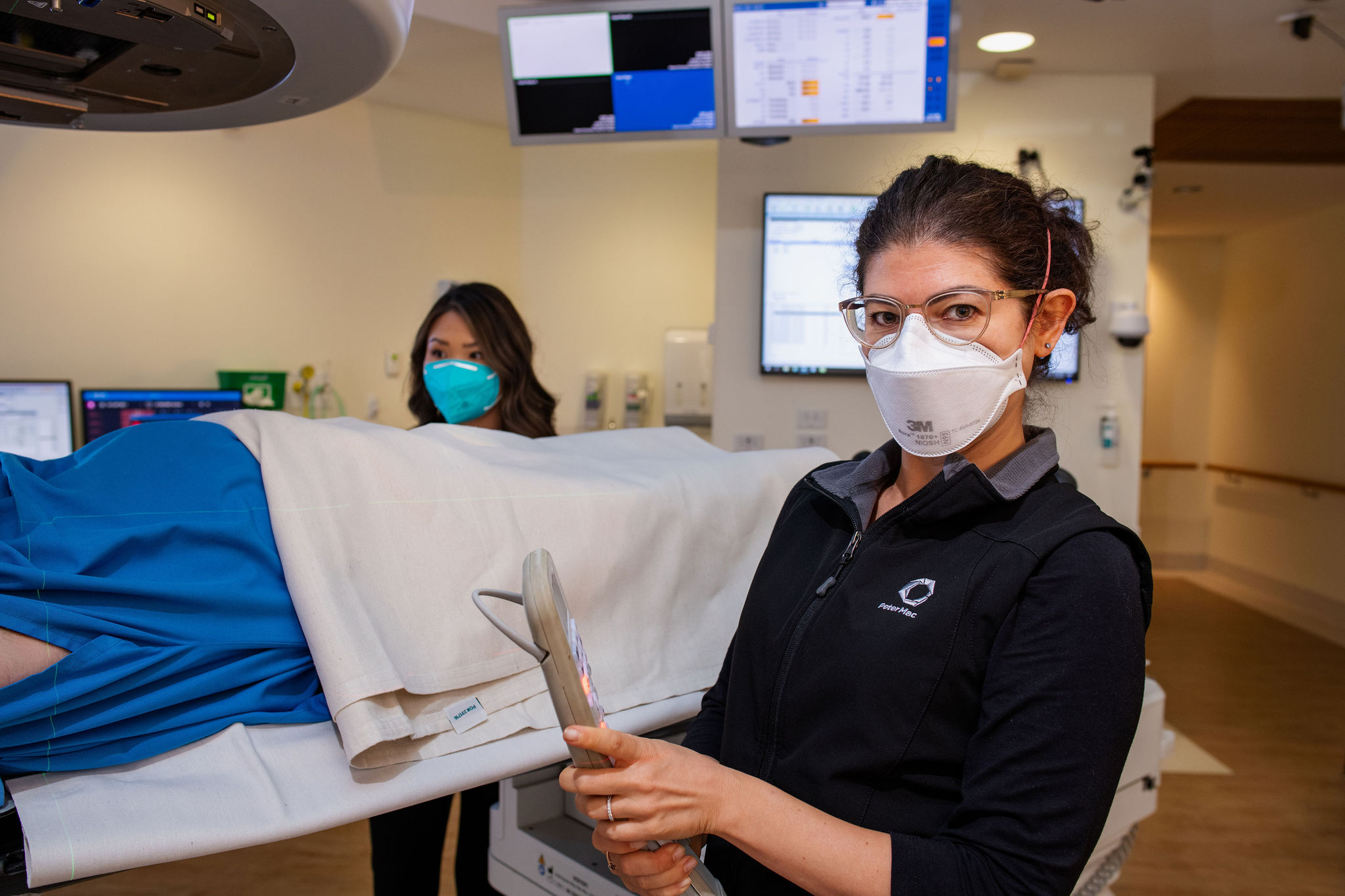
The Radiotherapy Department is a Monday to Friday service providing care for inpatients and outpatients requiring radiotherapy treatment for a range of cancer diagnoses.
Radiotherapy treatment includes:
External Beam radiation therapy
Steriotactic ablative body radiation therapy (SABR)
Gamma Knife
Brachytherapy
Radiotherapy nursing staff work within a multidisciplinary team including radiation oncologists, radiation therapists, medical physicists, physiotherapists, dietitians, pharmacists, and speech pathologists.
Nurses working in the radiotherapy department provide a high level of physical and psychological support before, during, and after the treatment process, including conducting patient health assessments, responding to acute deterioration, providing education and managing patient symptoms associated with the treatment. The Radiotherapy Department is a dynamic and high-paced clinical environment that enables holistic care to be provided to patients from every tumour stream.
Information on how to apply for our 2026 Graduate Nurse Program
To participate in Peter Mac’s Graduate Nurse Program, list the Peter MacCallum Cancer Centre as your hospital preference for a Victorian Graduate Nurse Program via the Postgraduate Medical Council of Victoria’s Allocation and Placement Service
Graduate Nurse Program positions will be offered at full time or eight days per fortnight (depending on the clinical area) and applicants will need to provide the following:
Letter of application
Curriculum Vitae including a list of clinical placements
Academic transcript with key
Two recent clinical appraisal tools (minimum of one acute placement)
You will need to provide your referee details to the Allocation and Placement Service
Please submit your application via Peter Mac’s Careers site, addressing it to Ms Michelle Rutherford, Graduate Nurse Program Coordinator. Applications will open on Monday 2 June 2025.
If your application is successful, you will be invited to partake in an interview.
Successful applicants will be notified via the Postgraduate Medical Council of Victoria’s (PMCV) Allocation and Management service website in Setpember 2025.
Supports for Aboriginal and Torres Strait Islander gradudate nurses
Peter Mac is committed to becoming an employer of choice for Aboriginal and Torres Strait Islander Peoples.
Through the implementation of our Reconciliation Action Plan we are dedicated to closing the gap in health outcomes and life expectancy for Aboriginal and Torres Strait Islander people, to providing development and leadership opportunities to Aboriginal and Torres Strait Islander staff, and to building a culturally safe workforce.
We support our Aboriginal and Torres Strait Islander workforce by:
Providing cultural supervision for Aboriginal and Torres Strait Islander staff via our EAP provider, Converge.
Building spaces for peer connection and cultural debriefing such as the Aboriginal and Torres Strait Islander Staff Network.
Promoting ongoing development and learning for our workforce about cultural awareness and culturally safe practice.
Recognising and supporting culturally significant events such as National Reconciliation Week and NAIDOC Week.
The 2026 Graduate Nurse Program information evening is scheduled for Tuesday 3 June from 5:30pm to 8pm. This is both in person and online - if you would like to attend in person, please register via the button below.
If you are attending online, presentations start at 6:05pm.
Ask questions via Menti, using code 45288181 (this is open for questions now).
Opportunities include:
Meet clinical nursing staff, including our current graduate nurses, who will be manning booths promoting their specialised clinical areas.
Attend insightful presentations outlining why you should apply to complete your Graduate Nurse Program at Peter Mac (this part of the event will be live-streamed).
For enquiries regarding the Graduate Nurse Program, contact:
Michelle Rutherford Graduate Nurse Program Coordinator Phone: (03) 8559 7597 Email: This email address is being protected from spambots. You need JavaScript enabled to view it.
Cancer Nursing Professional Practice Pathway (CNPPP)
Following the 2026 Peter Mac Graduate Nurse Program, the graduate nurses enter a 12-month pathway designed to support nurses with their ongoing development.